
10 September 2026
Do I Need Council Approval for a Business Sign in SA?
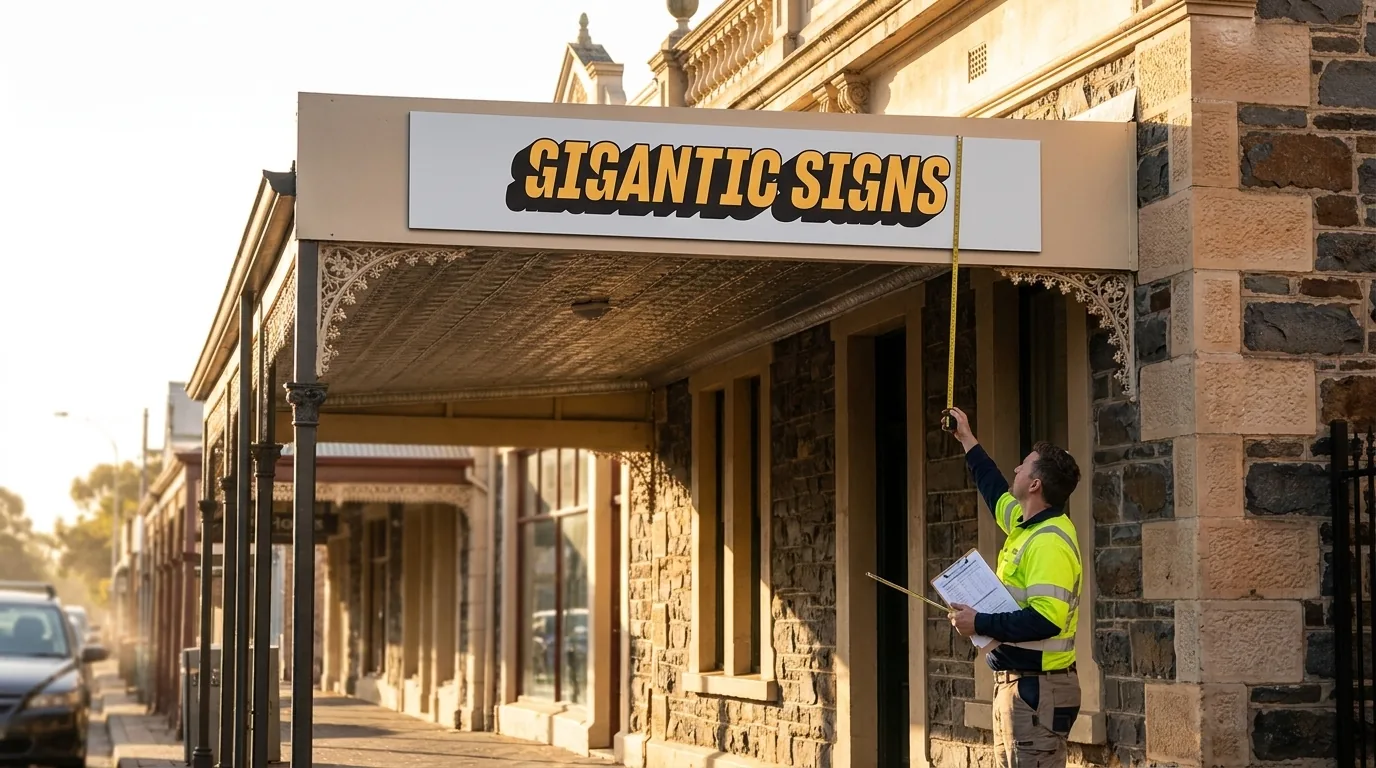
Do you need council approval for a business sign in South Australia? The short answer: it depends. Many flat signs on your own shopfront are exempt, but larger, illuminated or road-adjacent signs often need development approval. The safest move is to check the official PlanSA tool first. Gigantic Signs, based in Kent Town, handles signage approvals on real Adelaide projects.
We have been making signs for Adelaide businesses for over 30 years, and "do I need council approval?" is one of the first questions owners ask us. On bigger jobs -- illuminated shopfronts, building signage, pylons -- we work through the planning rules with clients all the time. This post explains the framework in plain English and points you to the official South Australian tools. For the sign types this most often affects, see our building signage and wider outdoor signage ranges.
Quick note before we start: this is general guidance, not planning advice. Signage rules in SA sit under the Planning, Development and Infrastructure Act 2016 and the state-wide Planning and Design Code, and the detail depends on your exact address, zone and sign. Always confirm with PlanSA or your council before you commit.
When is a business sign exempt in SA?
Some signs are excluded from the legal definition of "development" altogether, which means no development approval is needed. In South Australia, exemptions are set out in the Planning, Development and Infrastructure Act 2016 and its regulations, and the finer detail lives in the Planning and Design Code. As a rough guide, the signs most likely to fall inside an exemption are:
- Small, flat signs on your own building -- a modest, non-illuminated sign that identifies the business on the shopfront it belongs to is the classic low-risk case.
- Signs inside your premises -- signage that sits behind the glass and reads from inside the shop generally sits well clear of the approval trigger.
- Signs in the right zone -- what is exempt in a commercial or industrial zone can be treated very differently in a residential or heritage area, so the zone your address sits in matters.
The catch is that exemptions turn on specifics -- size, height, illumination, zone and whether the sign faces a road. We will not quote exact thresholds here, because those numbers change with Code updates and the only reliable place to read them is the Code itself. Rule of thumb: small, flat, on your own building and not lit is usually exempt; big, bright or road-facing means check first.
When do you need development approval?
PlanSA lists installing signage for advertising among the activities that usually need approval, so if any of the following describe your sign, plan on lodging a development application:
- Illuminated or digital signs -- LED, backlit or electronic message signs carry amenity and road-safety considerations that push them toward assessment.
- Large building signs and pylons -- freestanding pylon signs and big building-mounted signage almost always need approval, and often building consent as well.
- Signs facing a road or freeway -- advertising visible to traffic is assessed against road-safety policy. The state's Advertising Signs Assessment Guidelines from the Department for Infrastructure and Transport set out how these are judged.
- Signs in heritage or residential areas -- sensitive zones and heritage places have tighter rules, so even a modest sign can trip the approval line.
Where a sign needs approval, it is assessed against the Advertisements policy in the Planning and Design Code, weighing things like size, design, amenity and public safety. The relevant authority is usually your local council. Billboards are their own category -- if that is what you are planning, read our companion guide on whether you need a permit for a billboard.
What about footpath and road-side signs?
Putting a sign on land you do not own is a separate question from development approval. A portable A-frame or any sign placed on a public footpath, verge or other council land needs the council's permission under its moveable-sign by-law, made under the Local Government Act 1999. That is a quick council permit rather than a full planning assessment, but it is still a legal requirement, and the rules on size, placement and footpath clearance differ from council to council across Adelaide. If the sign faces a main road or highway, the road-safety guidelines above can also apply.
How do you check for your site?
South Australia has a free official tool for exactly this. Rather than guess, run your address through it before you order a sign:
- Go to PlanSA -- open the Do I Need Approval? page on the official PlanSA portal.
- Enter your property address -- the Approval Wizard uses your address to work out the zone and overlays that apply to your site.
- Answer the prompts about your sign -- it walks you through what you want to do and indicates whether approval is likely to be required and what the next steps are.
- Cross-check the Code -- for the fine detail you can browse the Planning and Design Code directly, and call your local council if anything is unclear.
Who handles the approval -- you or your sign company?
Legally, the development application is lodged by the owner or an agent acting for them, so the responsibility sits with you as the business or building owner. In practice, a good sign company does the heavy lifting. At Gigantic Signs we routinely prepare the drawings, dimensions and site details a planner needs, and we build the sign to suit what is likely to be approved rather than designing something that gets knocked back. On larger Adelaide jobs we will tell you up front if we think approval is needed and help you get the paperwork moving.
A recent example: a business on a busy Adelaide arterial road wanted a large illuminated sign facing the traffic. Because it was lit and road-facing, it was never going to be exempt, so before fabricating anything we produced scaled drawings and worked through the road-safety and amenity considerations so the application had the best shot. Getting it right at the start saved a redesign later -- the difference between a shop that just prints and one that has walked Adelaide owners through approvals for three decades.
Frequently asked questions
Do I need council approval for a small shopfront sign?
Often no. A small, flat, non-illuminated sign identifying your business on your own shopfront is frequently exempt in SA. Confirm it on the PlanSA wizard, because zone and heritage overlays can change the answer.
Do illuminated or LED signs always need approval?
Usually. Lit and digital signs raise amenity and road-safety issues, so they are typically assessed rather than exempt. Assume approval is required and check your address on PlanSA before ordering.
Do I need a permit for an A-frame on the footpath?
Yes, generally you need the council's permission to place any moveable sign on a public footpath under its moveable-sign by-law. It is a quick council permit, separate from planning approval, and the rules vary by council.
How do I find out for certain?
Run your property address through the official PlanSA "Do I Need Approval?" wizard, and call your local council for anything specific to your zone or a heritage listing.
Planning a sign in Adelaide? Talk to us first
Check your site on PlanSA, then let us take it from there. We deal with signage approvals on real projects, so we can tell you early whether your sign is likely exempt or needs an application, and build it to suit. Price a straightforward sign instantly with our quote tool, or if your job is larger, illuminated or road-facing, get in touch -- call our Kent Town team on (08) 8362 5455 and we will help you get it right. Thirty years on, we still build them GIGANTIC.