
4 March 2026
Safety Signs and Their Meanings in Australia
Did you know: You can’t put any old sign up in your workplace and say it’s for safety. That simply won’t cut it if something goes wrong.
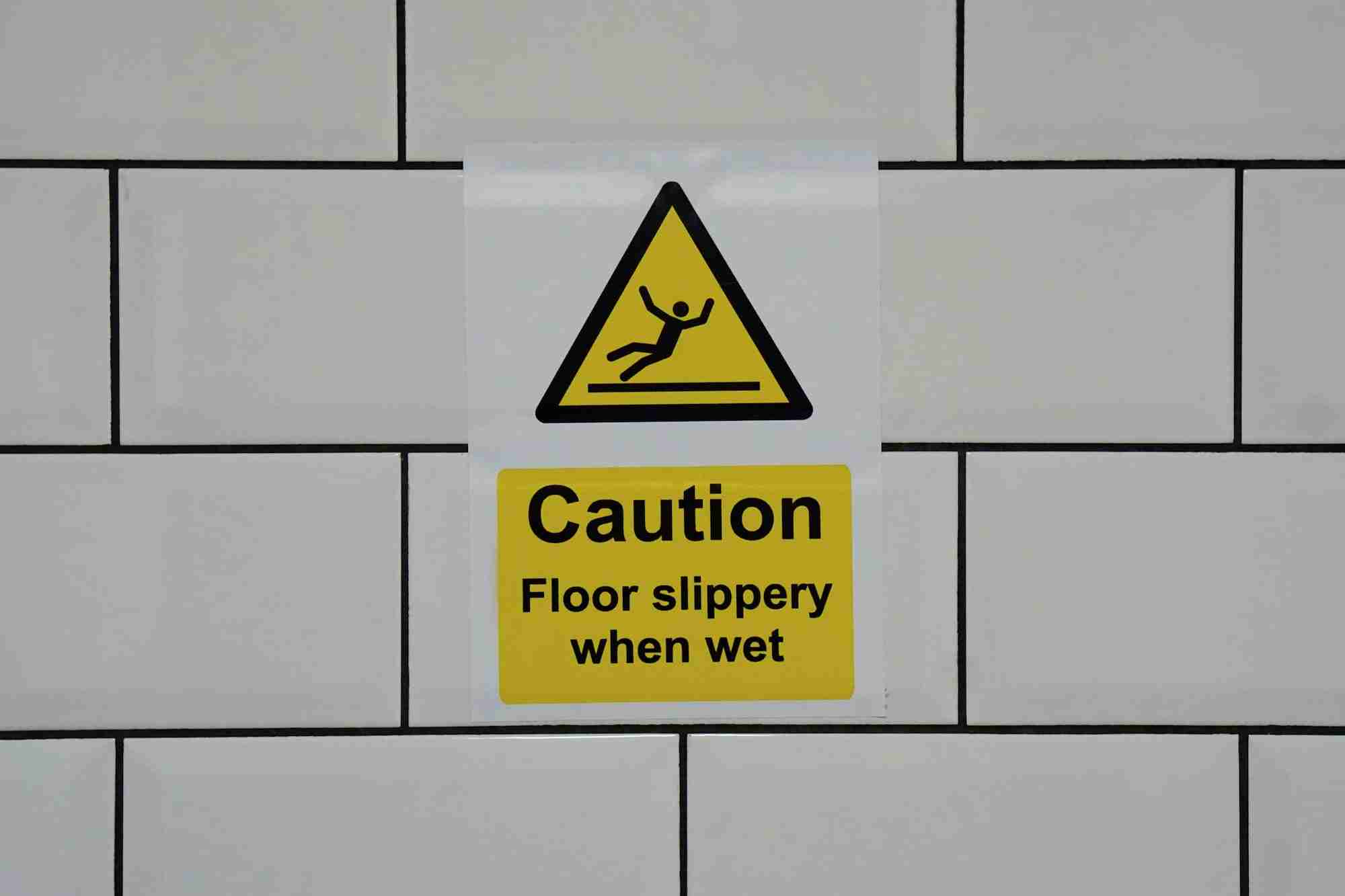
Safety signs and their meanings in Australia are standardised under AS 1319-1994, which covers the five main categories: prohibition (red), warning (yellow), mandatory (blue), emergency information (green), and fire safety (red with symbols). And understanding these signs is incredibly important, not just for compliance, but even more so for creating workplaces where everyone gets home safely.
At Gigantic Signs, we've been manufacturing compliant safety and statutory signage for Adelaide's workplaces, warehouses, and construction sites for over 30 years. We design, manufacture, and install workplace safety signage that meets Australian Standards while delivering the clarity and durability that your site demands. And over the years we’ve learned that good signage is good business, and when it comes to safety signage, there's no room for compromise.
Why workplace safety signs and symbols matter
Workplace safety signage communicates critical information instantly, often in situations where every second counts. And, under the Australian Work Health and Safety (WHS) regulations, employers must provide appropriate signage wherever hazards exist or specific actions are mandatory.
Because here's the reality: failure to display required signs can result in hefty fines and increased risk of workplace incidents. While proper signage creates a safety-conscious culture that protects your most valuable asset - your people.
The five categories of safety signs and their meanings in Australia
Prohibition signs (red and white)
Prohibition signs tell people what they cannot do, featuring a red circle with a diagonal line through it on a white background.
Examples: No smoking, No entry, No mobile phones.
These signs prevent actions that could cause harm around dangerous equipment, restricted areas, and locations where certain behaviours create unacceptable risks.
Warning signs (yellow and black)
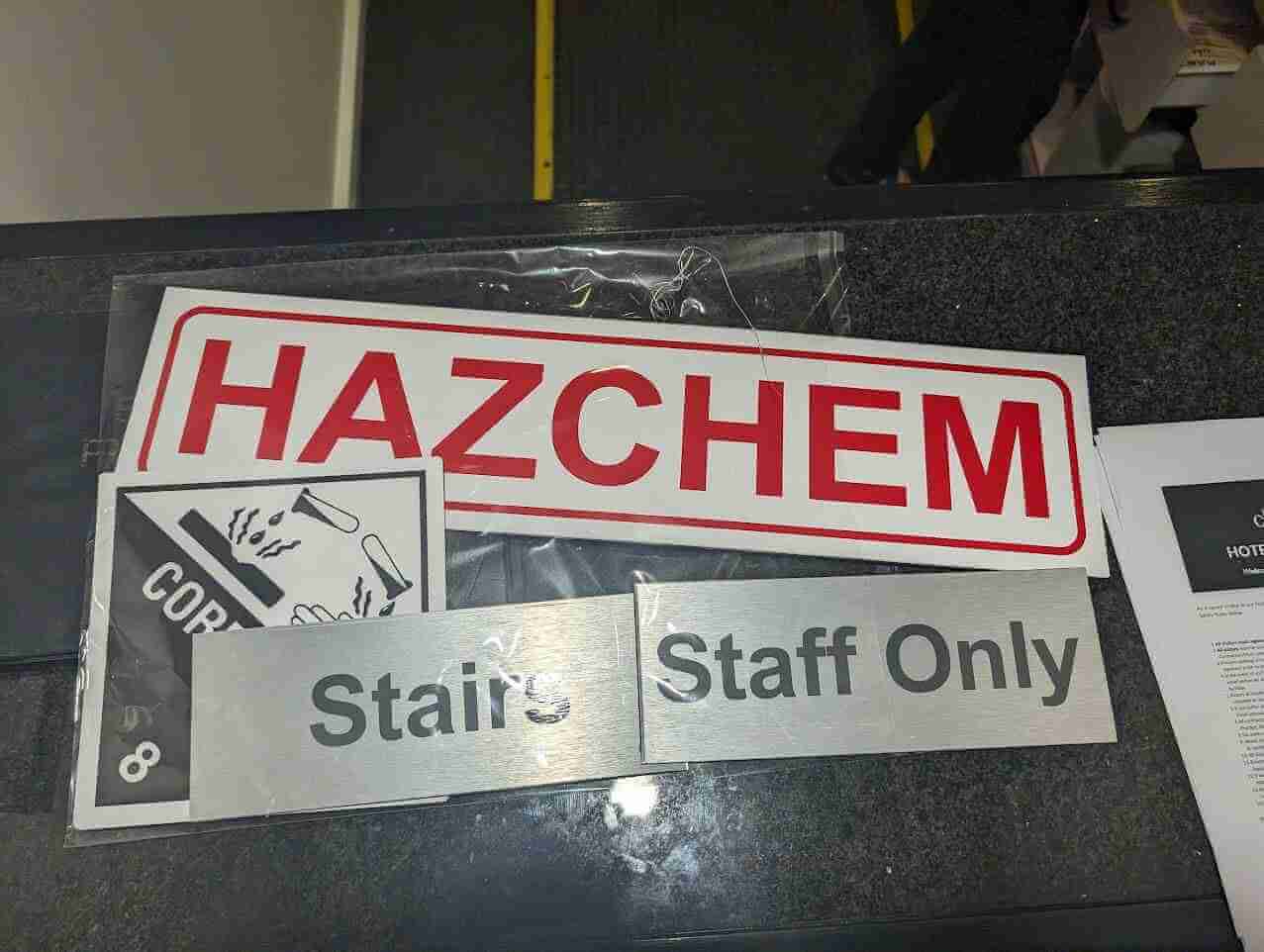
Warning signs alert people to potential hazards. These hazard and safety signs and their meanings use a yellow triangular background with black symbols or text that grab attention.
Examples: High voltage, Slippery surface, Overhead load, Chemical hazard.
Warning signs give workers time to prepare, take precautions, or avoid danger altogether, and are critical in warehouses, manufacturing facilities, and construction sites where multiple hazards exist.
Mandatory signs (blue and white)
Mandatory signs instruct people on actions they must take, featuring a blue circular background with white symbols or text.
Examples: Wear safety goggles, Wear hard hat, Wear high-visibility clothing, Wear hearing protection.
Mandatory signs ensure workers use appropriate personal protective equipment (PPE) and follow safety procedures wherever specific safety equipment or actions are necessary to prevent injury.
Emergency information signs (green and white)
Emergency information signs show the location of emergency equipment, exits, and first aid facilities using green backgrounds with white symbols.
Examples: Emergency exit, First aid station, Assembly point.
Emergency signage must be clearly visible and well-lit, especially during emergencies when quick action saves lives.
Fire safety signs (red and white)
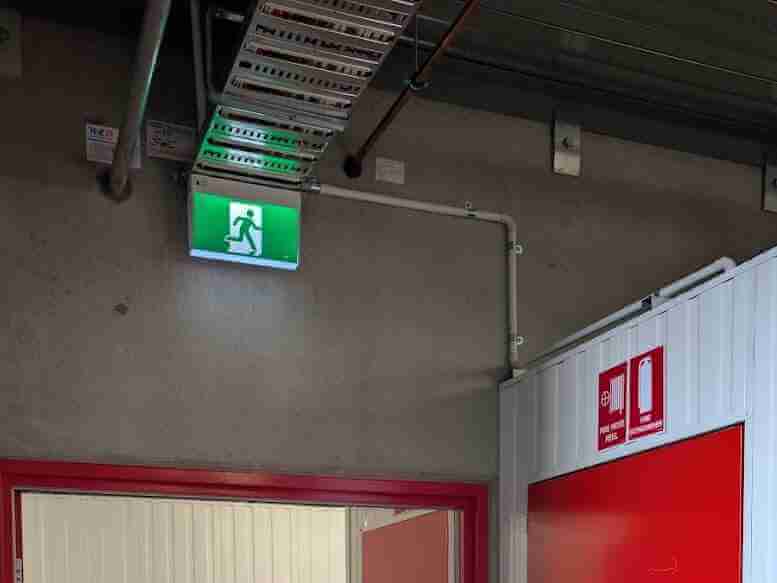
Fire safety signs indicate the location of fire equipment and emergency procedures using red backgrounds with white symbols.
Examples: Fire extinguisher location, Fire hose reel, Fire alarm call point, Fire blanket
Fire safety signage must be positioned above or adjacent to fire equipment, no more than 2 metres from floor level for easy access during emergencies.
AS 1319-1994: The Australian Standard you need to know
AS 1319-1994 sets the legal requirements for compliant workplace safety signage in Australia. This standard covers design specifications, colour requirements, symbol usage, and placement guidelines to ensure consistent, effective safety communication.
While AS 1319-1994 itself isn't legally binding, compliance is required to meet WHS regulations. Courts and safety regulators expect Australian workplaces to follow this standard when implementing safety signage at all times.
Where to place workplace safety signs and symbols
Effective placement maximises sign visibility and impact:
- Prohibition and mandatory signs: Place at entry points, near dangerous machinery, and at eye level (1.5-1.8 metres) where they're impossible to miss
- Warning signs: Position well before hazard zones, giving workers adequate time to respond and take precautions
- Emergency information signs: Install above or adjacent to emergency equipment and exits, visible from multiple angles
- Fire safety signs: Mount above fire equipment, no more than 2 metres from floor level, with directional arrows when needed
We recently worked with a major Adelaide warehouse that needed comprehensive safety signage for their expanded facility. After conducting a full site audit, we designed and installed 150+ AS 1319-compliant signs covering everything from hazard warnings to emergency exits. Their safety manager told us the new signage significantly improved contractor and visitor compliance, and their WHS audit score jumped dramatically.
Choosing compliant safety signage materials for Adelaide
We get it. Adelaide's demanding conditions require durable materials that can handle extreme heat, UV exposure, and everything our climate throws at them.
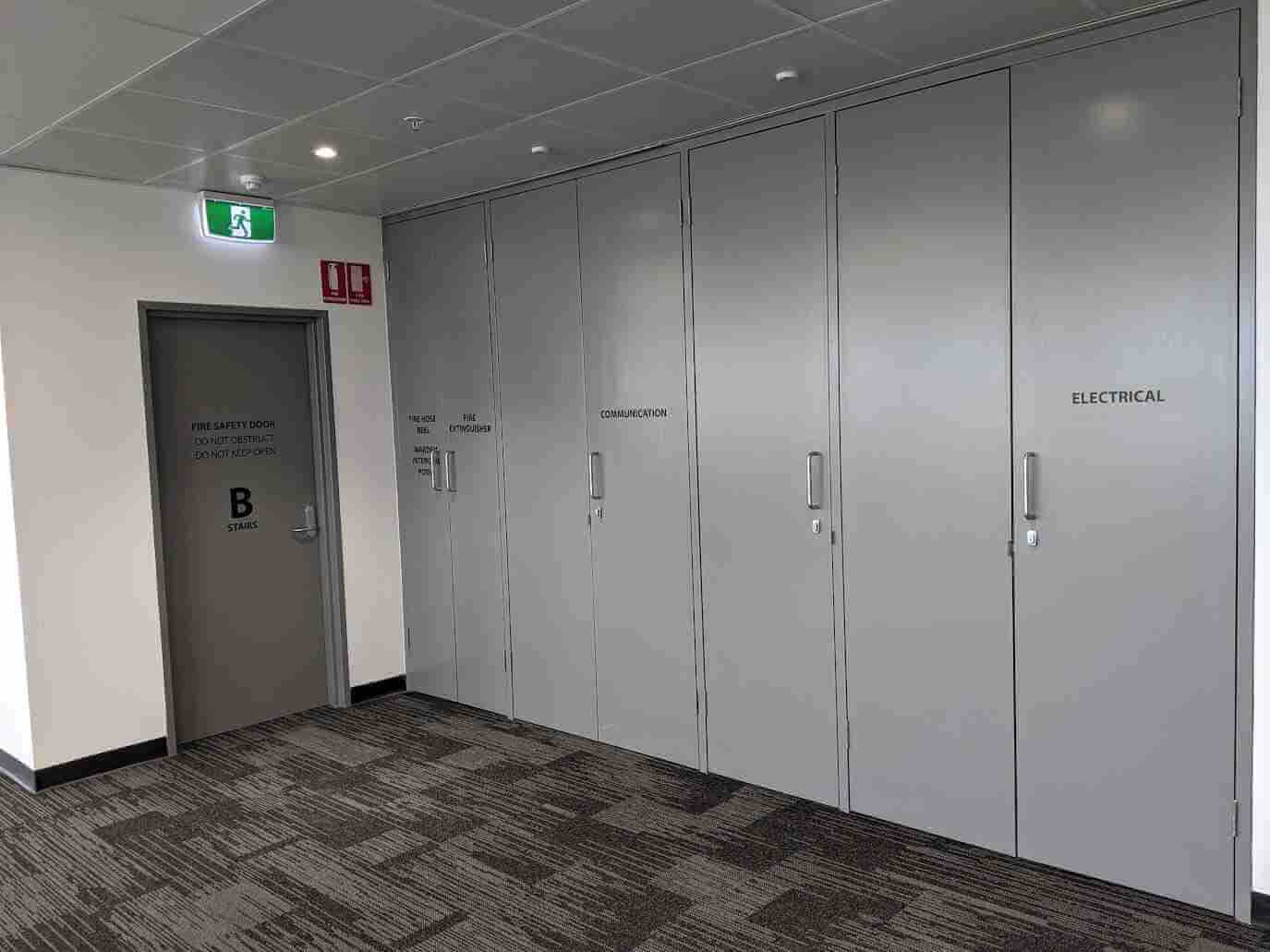
This is why we manufacture workplace safety signage using aluminium for rust-resistance, polypropylene for wet areas, self-adhesive vinyl for indoor surfaces, and corflute for cost-effective temporary signage. And, all of our safety signs meet AS 1319-1994 specifications, with optional reflective finishes for low-light environments and anti-graffiti coatings for high-traffic areas.
Creating safety-conscious workplaces that work
Regular inspection ensures your signs remain compliant and effective. Check all signs quarterly for fading or damage, replace any compromised signage immediately, and update after any equipment or procedures change. Damaged or missing safety signage creates liability and puts people at risk - so don't let that happen on your watch.
At Gigantic Signs, we understand that workplace safety signage protects your people and your business. Our team designs custom safety solutions that meet Australian Standards, withstand Adelaide's demanding conditions, and deliver the clarity your workplace needs. We manufacture everything locally at our Kent Town facility, ensuring quality control and fast turnaround times when you need signage quickly.
Ready to create a safer, more compliant workplace? Contact our team, and let's chat about workplace safety signage that will make a GIGANTIC impact on your Adelaide business, today.