
18 August 2026
Day/Night Acrylic Signs Explained
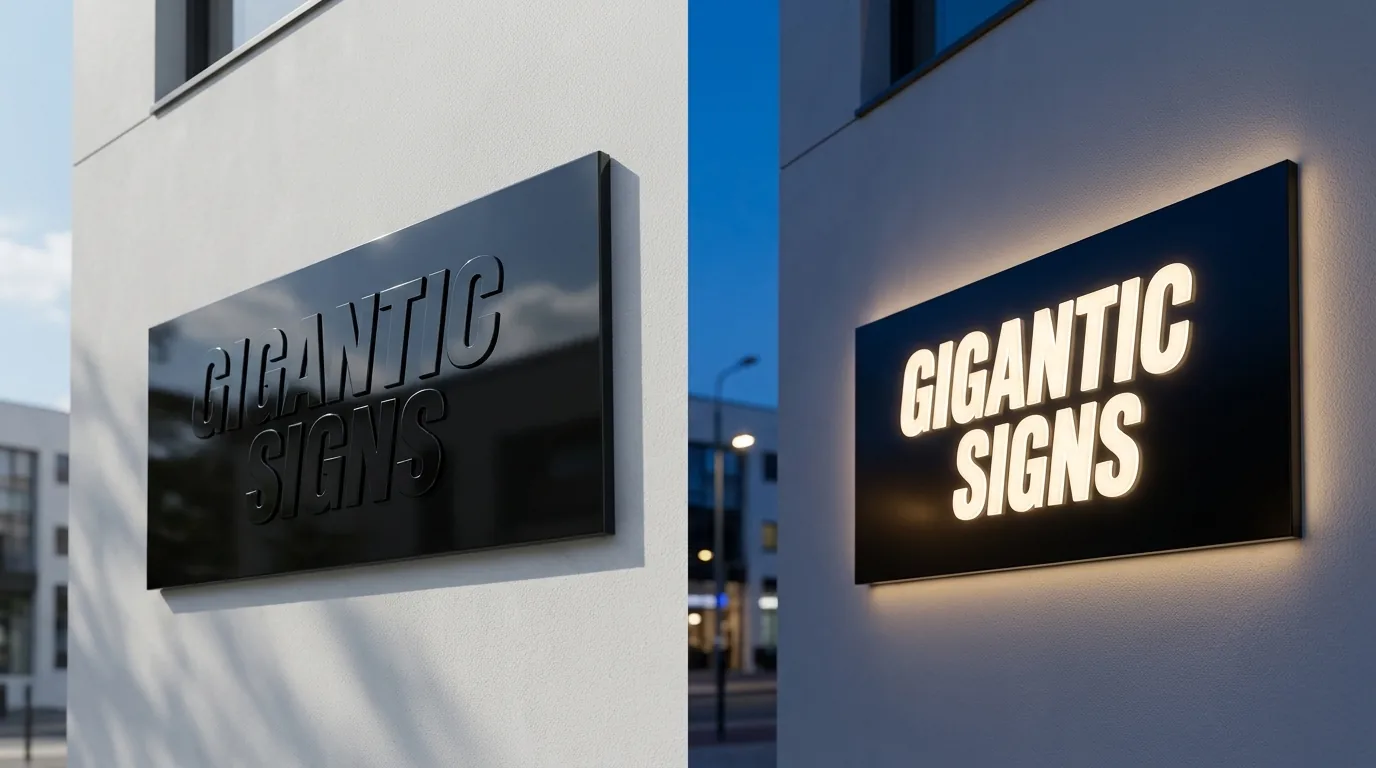
Day/night acrylic is a sign material that looks solid black in daylight and glows with your illuminated message after dark. Gigantic Signs works with it at our Kent Town workshop here in Adelaide. It behaves like a tinted mirror film: opaque and blank by day, but as soon as the sign is backlit the light pushes through and reveals the graphic at night.
We've been making signs for Adelaide businesses for over 30 years, and day/night acrylic is one of those tricks most people have never heard of because so few sign makers bother with it. Everything is built and finished at our Kent Town facility, so we can test how a panel reads on the bench, lit and unlit, before it ever goes on your building. If you want the broader range, see our illuminated signs options -- but day/night acrylic is a genuinely different look, and it's worth understanding why.
How does day/night acrylic work?
The material has a tinted, mirror-like layer that reads as opaque black under normal daylight. Light hitting it from the front simply bounces back, so the panel looks like a clean dark surface and your graphic stays hidden. The moment you put light behind it, the balance flips. Backlighting is strong enough to travel through the tint from the inside, so the illuminated parts of your message come to life while the rest of the panel stays dark.
This is the same push-through principle behind any good back-lit sign, just taken a step further. In a normal light box you want the lit areas made from opal (diffused) acrylic, which spreads light evenly. White or opaque acrylic in the wrong spot doesn't let light through and doesn't diffuse, so you get a dim or patchy result -- the exact problem we cover in why an illuminated sign looks dim or uneven. Day/night acrylic uses a controlled tint layer to hold that push-through effect back until dark, then release it. Get the material and the lighting right and you effectively own two signs in one panel.
Why don't more sign makers use it?
Honestly, it comes down to familiarity and a bit of extra care in the build. It's a specialty material rather than a standard sheet off the shelf, so a lot of shops never reach for it. The day-versus-night effect also has to be planned properly: the tint, the graphic and the lighting all have to work together, and you really want to prove it on the bench before it goes up. Here's why it stays rare:
- It's a specialty product -- not the default acrylic most sign shops stock, so it never enters the conversation.
- It has to be designed for two states -- the panel needs to look intentional and clean when it's dark, not just when it's lit, and that takes planning.
- The lighting has to match the material -- too little backlight and the night effect is weak, so the light source and the panel are specified together.
None of that is difficult once you've done it a few times. It's just that most sign makers stick to what they know, which is exactly why a day/night panel still turns heads.
Where does day/night acrylic look best?
The effect earns its keep anywhere the sign is seen in both daylight and darkness, and where a clean, minimal look by day matters as much as visibility by night:
- Premium shopfronts -- a discreet dark panel that reads as understated by day, then lights up as a glowing logo after close. Great for hospitality, beauty and studio brands.
- Building and fascia signage -- a smart way to add a night-time presence without a busy, always-on face. It sits alongside the other outdoor building sign types when you want something less obvious in the daytime.
- After-hours trades -- venues, clinics and services that want to be found at night but prefer a subtle look during business hours.
Where it's less suited is anywhere the sign is only ever seen in daylight, or where you actually want the message bold and visible around the clock. In those cases a standard illuminated or non-illuminated panel is the better call, and we'll tell you so.
A day/night sign from the Adelaide workshop
We keep a day/night acrylic sample on the bench at Kent Town precisely because it's the fastest way to explain it. Sitting under the workshop lights it looks like a plain dark panel, and most people assume the graphic has been left off. Then we switch the backlight on and the message appears out of what looked like solid black. It's a genuine "oh, that's clever" moment every time, and it's the sort of detail that makes a brand look considered rather than loud. That two-in-one behaviour, built and proven in Adelaide before it goes on your wall, is the whole appeal.
Frequently asked questions
Is day/night acrylic the same as a normal light box?
No. A normal illuminated sign shows its message day and night. Day/night acrylic hides the message in daylight and only reveals it once the sign is backlit, so you get a plain dark panel by day and a glowing graphic after dark.
Does it need to be illuminated to work?
Yes. The night-time effect depends on backlighting pushing through the tint. Without a light source behind it the panel just stays dark, so day/night acrylic is only worth using where the sign will be lit.
Can I see the effect before I commit?
Absolutely. Because we build at Kent Town, we can show you a lit-and-unlit sample and prove the day-versus-night look on the bench before your sign is made. Just ask when you get in touch.
Thinking about a day/night sign?
Day/night acrylic is one of the most underused tricks in signage, and it's exactly the kind of thing we love building. Price up an illuminated sign with our instant quote tool, browse the full illuminated signs range, or call our Kent Town team on (08) 8362 5455 for design advice on whether a day/night panel suits your spot. Thirty years in, we still get a kick out of a sign that hides in plain sight by day and lights up GIGANTIC by night.